Do You Really Need an EPC B? The Truth for Commercial Owners in 2026
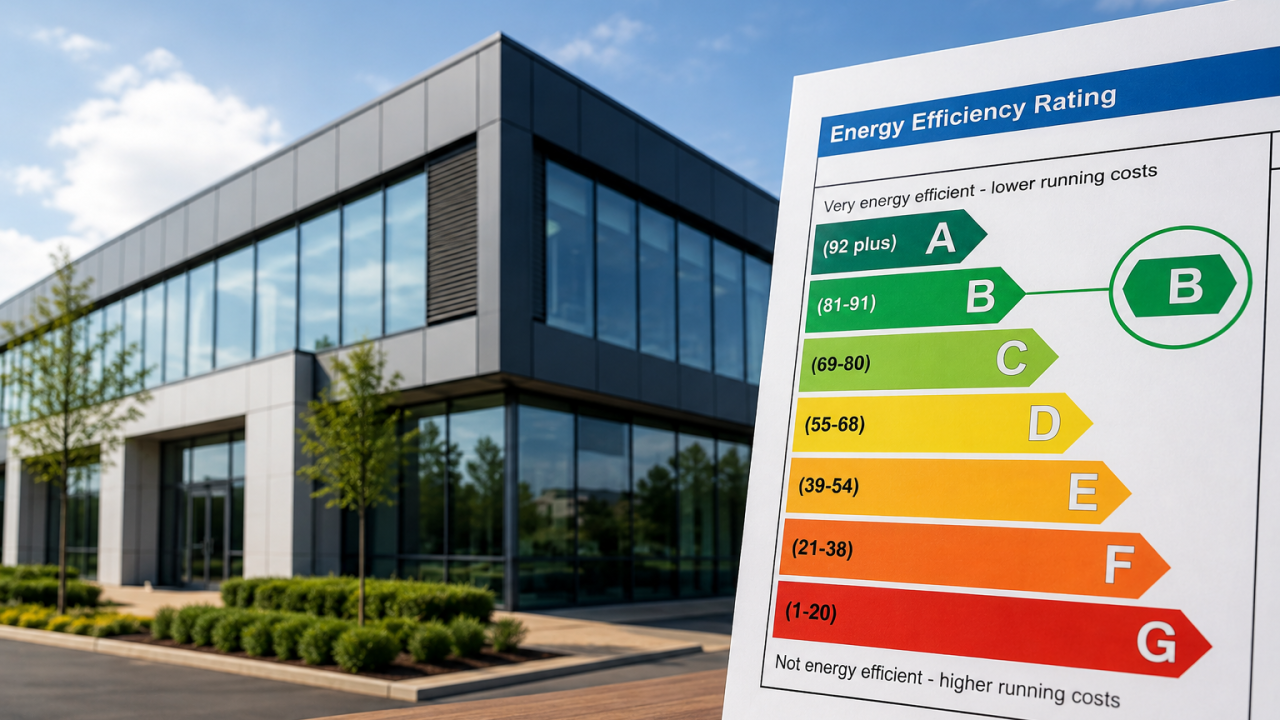
If you’ve been following the rollercoaster of UK energy legislation, you might be feeling a bit of "compliance fatigue."
Just last month, the headlines shifted again. With the 2027 interim target for an EPC C officially scrapped for most, many commercial landlords and business owners in Bournemouth and beyond are breathing a sigh of relief. The pressure is off, right?
Not exactly.
While the legal "must-have" date for an EPC B has settled on 2031 (for buildings over 1,000 m²), the market has already moved. If you’re waiting for 2031 to start your retrofit, you aren’t just flirting with a deadline: you’re likely bleeding capital value every single month.
In 2026, the question isn’t whether the government will fine you today. The question is whether your lender, your tenants, and the National Grid will penalize you tomorrow.
Here is the truth about the EPC B requirement and why "waiting and seeing" is becoming the most expensive strategy in commercial real estate.
The Regulatory Reality: What Actually Changed?
Let’s clear up the confusion. As of June 2026, the government confirmed its focus on the 2031 deadline.
-
Buildings over 1,000 m²:
The target is an EPC B by 2031, provided it is "cost-effective" (the 7-year payback test).
-
Buildings under 1,000 m²:
These currently remain at the EPC E baseline, with no set deadline to move higher: for now.
-
The 2027 Milestone:
The previously proposed jump to EPC C by 2027 has been dropped.
On paper, this looks like a reprieve. But look closer. While the legal floor hasn't moved as fast as expected, the operational floor just fell through the basement.
The April 2026 TNUoS Factor: The "Secret" Bill Hike
While everyone was looking at EPC certificates, the grid changed the rules of the game.
In April 2026, we saw significant increases in TNUoS (Transmission Network Use of System) grid fees. These aren't commodity costs: you can’t just switch suppliers to escape them. They are the costs of maintaining the high-voltage network, and they are being heavily loaded onto "always-on" businesses.
If you run a gym, a hotel, or a 24/7 restaurant, your EPC rating is no longer just a piece of paper for the file: it is a direct reflection of your exposure to these grid fees.
A building rated 'D' or 'E' in 2026 isn't just "less efficient"; it is a massive liability. High, inflexible demand means you are paying a premium for every kilowatt-hour that leaks through poor insulation or inefficient HVAC systems. We are seeing businesses in Bournemouth facing £2,000 to £8,000 in additional annual costs simply because their building "fabric" can't handle the new grid pricing structures.
Brown Discount vs. Green Premium: The Market Is Self-Regulating
Lenders and investors aren't waiting for the secondary legislation to pass through Parliament. They are already pricing the 2031 EPC B target into their valuations today. This has created two distinct classes of commercial property:
1. The Green Premium
Assets that already hit the EPC B mark (or have a clear, funded path to it) are seeing "Green Premiums." These buildings attract top-tier tenants who have their own Net Zero targets to hit. They also enjoy better refinancing terms, as banks look to "green" their own portfolios to satisfy ESG requirements.
2. The Brown Discount
Conversely, "Brown" assets: those stuck at D or E: are facing a "Brown Discount." If you try to sell or refinance an EPC E building today, the surveyor isn't just looking at the current rent; they are subtracting the estimated capex required to hit an EPC B by 2031.
If your building needs £50,000 of work to reach compliance, that £50,000 (plus a risk margin) is coming straight off your valuation right now.
Sector Spotlight: Why This Hits Harder in Hospitality and Leisure
For landlords of commercial properties, the risk is valuation. For the occupiers in those buildings, the risk is survival.
-
Hotels:
With 24/7 climate control and high hot water demand, an EPC B isn't about compliance; it's about protecting the bottom line against 2026's volatile energy market.
-
Gyms:
Lighting and massive ventilation requirements make gyms prime targets for high grid fees. Efficiency upgrades identified in a
often pay for themselves in under 18 months.
-
Pubs and Restaurants:
These are "always-on" environments. Every watt saved on lighting or refrigeration is a direct contribution to a margin that is already under pressure from labor and food costs.
The Green Wing Solution: Moving Beyond the Certificate
At Green Wing Energy Solutions, we see the EPC B target differently. We don't think you should aim for it because the government told you to. We think you should aim for it because it’s the only way to stay competitive in a high-cost energy economy.
We aren't installers. We don't have a bias toward solar, or ASHPs, or LED lighting. We are your single point of contact: an independent energy consultancy that sits on your side of the table.
Step 1: The Discovery Assessment
We spend 2–4 hours on-site. We don't just look at your EPC; we look at how you use energy. We find the "Quick Wins" that the typical EPC assessor misses.
Step 2: The Roadmap
Within 24 hours, you receive your branded Roadmap. It’s a plain-English report that ranks recommendations by ROI, not just carbon. We show you exactly how to bridge the gap from where you are now to an EPC B: and exactly how much it will save you in light of the April 2026 grid fee hikes.
Step 3: Managed Implementation
If you decide to proceed, we source quotes from our vetted supplier network. We manage the process from approval to completion. You get the results; we handle the contractors.
Don't Let 2031 Become a Crisis
The "Truth" for commercial owners in 2026 is simple: The law might have given you a five-year window, but the market has already closed it.
Whether you are looking to increase the value of a portfolio or simply reduce the overheads of a single site, the path to EPC B is the path to profitability.
Most businesses we work with find between £2,000 and £8,000 in annual savings during our initial assessment. Our Energy Manager subscription ensures those savings don't "drift" back up over time, keeping you ahead of legislation and grid fee increases year-round.
Take the First Step
The best time to plan for 2031 was two years ago. The second best time is today.
To see what a Discovery Assessment looks like for your specific sector: be it a hotel in Bournemouth or a restaurant group across the South: reach out to Jon Cullum at Green Wing. Let’s turn your compliance headache into a competitive advantage.
Arrange an Energy Review Start with a free 15-minute discovery call.
Next step
See what your estate is really doing with energy.
Arrange an Energy ReviewStart with a free 15-minute discovery call.