Why Everyone is Talking About Real-Time Energy Monitoring (And You Should Too)
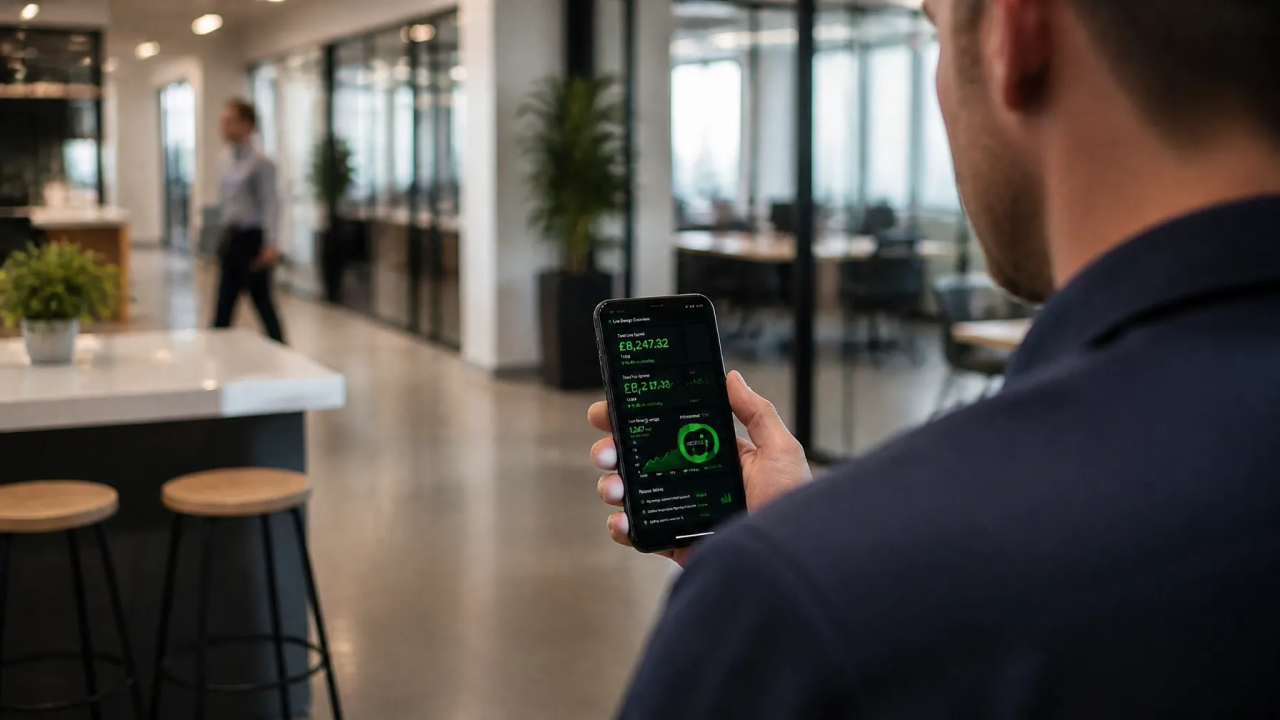
If you run a business, energy probably sits in the background for most of the year. It shows up as a bill, gets filed as overhead, and rarely gets much attention unless the number suddenly jumps.
That approach used to be common. But with costs still under pressure, energy is no longer something most businesses can afford to ignore. What looked like routine spend often turns out to include a surprising amount of avoidable waste.
That’s why more businesses are looking at real-time energy monitoring. Not because it sounds clever, but because it gives people a clearer view of what their building, equipment, and operations are doing in the moment.
Whether you manage an office, a retail unit, a warehouse, a hotel, or a multi-site commercial portfolio, the principle is the same: the faster you can see what’s happening, the faster you can make better decisions.
What Is Real-Time Energy Monitoring, Really?
Most businesses still make energy decisions using delayed information. You look at a monthly bill, half-hourly data, or a smart meter reading after the fact and try to work out what caused the spike.
A real-time energy monitoring system changes that. Instead of waiting for a report, you can see live energy use as it happens across your site.
It can help you understand:
- Which equipment or areas are using the most power right now.
- When demand rises unexpectedly during the day.
- Whether heating, cooling, ventilation, or lighting is running harder than it should.
- How much energy is being used outside normal operating hours.
That makes energy easier to manage. It moves the conversation from guesswork to evidence.
Why Now? Better Visibility, Better Decisions
Energy waste is rarely dramatic. Most of the time, it’s quiet. It sits in equipment schedules, overnight baseload, systems running longer than needed, and small faults that go unnoticed until the bill arrives.
That’s where real-time energy monitoring becomes useful. It gives you visibility that a monthly bill simply can’t. You can see spikes as they happen, spot patterns across the day, and understand what is actually driving consumption.
In an office, that might mean discovering the HVAC is starting up hours before people arrive. In retail, it could be lighting and display equipment running at full load after closing time. In a warehouse, it may be heating large spaces unnecessarily or battery charging schedules pushing demand at the wrong times.
And once you can see it, you can do something about it.
That might mean:
- Adjusting operating schedules
- Reducing unnecessary overnight load
- Identifying equipment that may be underperforming
- Making simple operational changes that cut waste without affecting service
Without visibility, you’re guessing. With it, you can make more confident decisions and build better habits around energy use.
Invisible Waste: The Silent Profit Killer
For most businesses, waste is rarely one big obvious issue. It’s usually a long list of smaller things that quietly add up.
In Offices
Heating and cooling often run outside occupied hours. Meeting rooms sit empty while lights, screens, and ventilation stay on. A monitoring system can highlight those patterns quickly.
In Retail
Lighting, signage, refrigeration, and display equipment can keep consuming energy well beyond trading hours. Real-time data makes it easier to spot what is being left on and when.
In Warehouses
Large spaces are expensive to heat and light. Monitoring can reveal whether systems are operating in areas or at times that don’t match actual activity.
In Hospitality and Leisure
Ventilation, hot water, cooling, laundry, and kitchen equipment can all create high baseload demand. Monitoring helps separate what is essential from what is simply waste.
The common thread is simple: invisible waste becomes much easier to deal with once it becomes visible.
How to Get Started with Monitoring
If you’re new to real-time energy monitoring, the good news is that you don’t need to overcomplicate it. The most effective approach is usually to start with a few clear steps.
-
Understand your baseline:
Review what your site currently uses across the day, week, and month. The aim is to understand what "normal" looks like.
-
Identify priority areas:
Focus first on the equipment, circuits, or spaces most likely to drive costs, such as HVAC, lighting, refrigeration, compressors, or process loads.
-
Track live performance:
Use real-time data to see when consumption rises, falls, or behaves differently from expected patterns.
-
Look for actionable patterns:
Pay attention to out-of-hours use, recurring spikes, and equipment that seems to be working harder than it should.
-
Make one change at a time:
Adjust schedules, settings, or operating habits in manageable steps so you can see what actually makes a difference.
-
Review regularly:
Monitoring works best when data leads to action. A quick regular review can help stop small issues becoming expensive habits.
Turning Data into Better Decisions
The value of an energy monitoring system isn’t just in collecting data. It’s in helping businesses make better operational decisions.
That could mean reducing unnecessary usage, catching faults earlier, improving maintenance planning, or building a stronger case for future efficiency upgrades. It can also support wider goals around sustainability, reporting, and cost control.
In short, real-time monitoring helps you understand whether the energy you’re paying for is genuinely supporting the way your business runs.
Ready to stop guessing?
Energy isn’t getting any simpler, and most businesses have more to gain from visibility than they think.
If you want to better understand where your energy is going, real-time monitoring is a practical place to start. It won’t solve everything overnight, but it will give you a clearer picture of what’s happening and where to focus first.
What to do next:
-
Review your current energy data and look for obvious gaps in visibility.
-
Speak to an expert or advisor if you want help understanding what monitoring could show in your specific environment.
-
Connect with Jon on LinkedIn
or drop us an email if you’d like to start a conversation about what good monitoring looks like for your business.
The goal isn’t just to collect more data. It’s to make smarter decisions with it.
Arrange an Energy Review Start with a free 15-minute discovery call.
Next step
See what your estate is really doing with energy.
Arrange an Energy ReviewStart with a free 15-minute discovery call.