Why was our hotel room too hot in November?
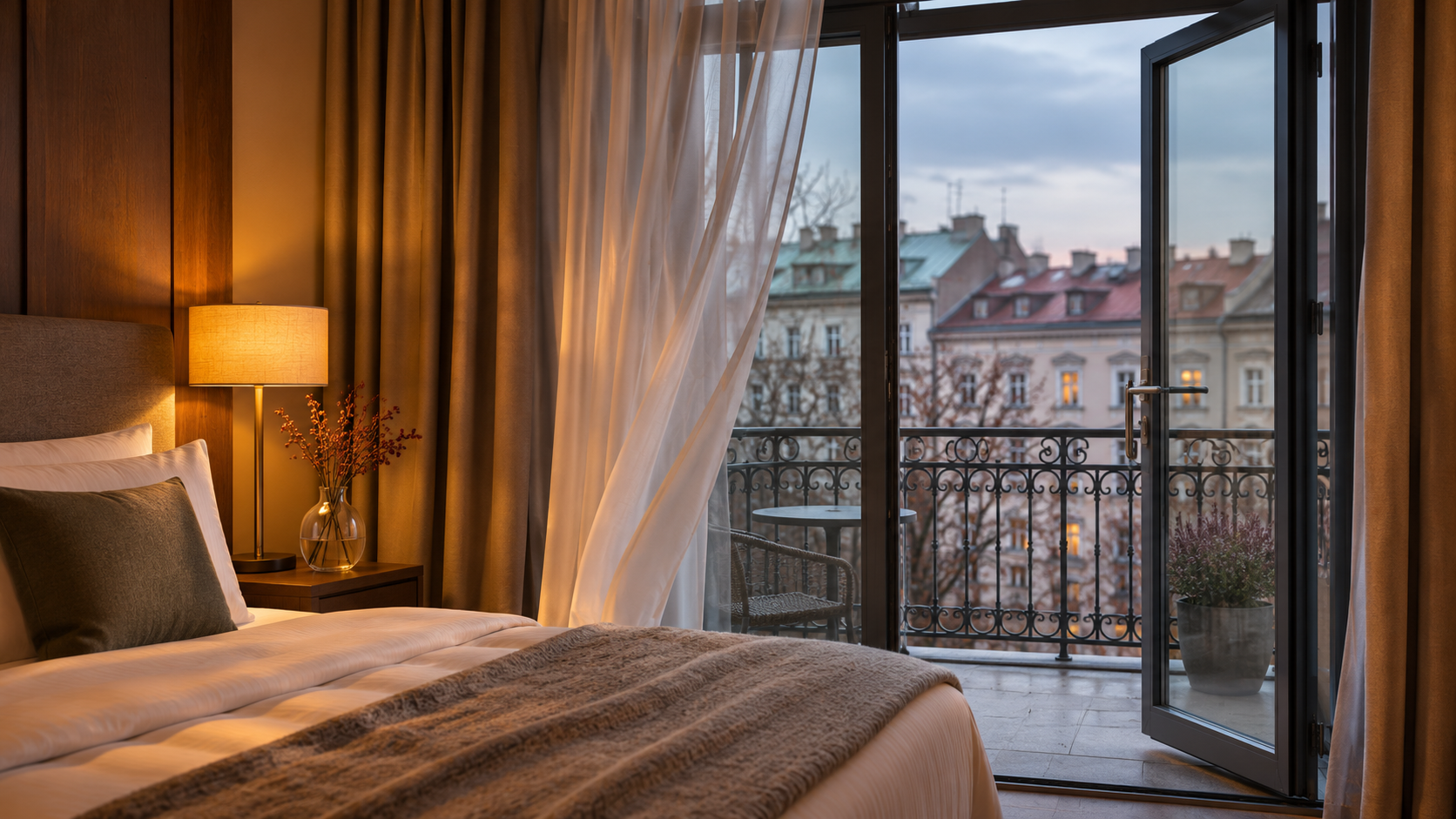
There was no blog last week because I was away in Kraków. I didn’t expect to come back thinking about heating controls, but there I was, standing by an open balcony door in November, trying to cool down a hotel room.
We’d turned the thermostat right down, but the room was still too warm. The controls appeared to be locked to heating mode, and opening the balcony door was the only way we found to cool the room down. It helped during the day. At night, once we closed it, the room was uncomfortable again.
It made me wonder how hotels check whether their winter settings are saving energy while still giving guests a room they can sleep comfortably in.
Is opening the balcony door more energy efficient?
It depends on what the heating does while the door is open.
If the room is already too warm and the heating stays off, cooler outdoor air can bring the temperature down without running mechanical cooling. If the heating comes back on as the room cools, the system can start replacing the heat that’s escaping outside.
From the room, we couldn’t tell whether the heating was still running. The warmth could have come from the room’s heating system, sunlight through the glazing, or heat moving in from elsewhere in the building. What we could tell was that turning the thermostat down wasn’t enough to make the room comfortable overnight.
That’s the starting point for an energy investigation. Check the room temperature, the temperature setting and what the equipment is actually doing at the same time.
One building can have several temperature problems at once
A sunny hotel room with a large window can warm up while a shaded room on the same floor still needs heating. The same thing happens in offices, leisure centres and other large buildings. An entrance can feel cold every time the doors open while a meeting room gets too warm as soon as it fills up.
If you only look at the central thermostat or the building-wide average, those problems can cancel each other out on paper. The average looks fine while people at opposite ends of the building are asking for different things.
Start with the spaces people complain about, then compare them with similar spaces where people are comfortable. In a hotel, that might mean logging temperatures in a warm room and a cooler room on the same floor. In an office, it could mean comparing a sun-facing meeting room with one on the shaded side. The contrast helps you decide where to look next.
What would we monitor in a larger building?
At Green Wing, we’d start with a few representative spaces and bring together the information that helps explain what’s happening.
| What to check | What it can tell you |
|---|---|
| Actual room temperatures over time | Whether the room warms up with afternoon sun, stays warm overnight or takes too long to recover after it’s been empty. |
| Thermostat settings and sensor readings | Whether the temperature the controls see reflects what people feel where they sleep, sit or work. A sensor close to a heat source or draught can give a misleading picture. |
| Heating and cooling activity | Whether the heating valve stays open after a room is warm, the cooling starts too soon afterwards, or both systems are operating in the same space. |
| Occupancy, opening hours and overrides | Whether equipment runs at full comfort settings in empty rooms, or an old override is keeping it on after hours. |
| Energy use and comfort complaints | Whether a change reduces energy demand while improving conditions in the rooms people actually use. |
A building management system can provide some of this information if the relevant equipment is monitored. Temporary room-temperature loggers can fill gaps. A single spot reading is easy to misinterpret. A room that feels fine at midday can be too warm at bedtime, which is when the guest needs it to be comfortable.
What good heating and cooling control looks like
Set temperatures around how each space is used. A hotel bedroom, a busy gym and an office meeting room have different needs. Give occupied spaces an appropriate comfort range, then adjust settings for empty rooms where the system allows. Check how long each space takes to become comfortable again before people return.
Leave a gap between heating and cooling. In a zone with both, the temperature that triggers cooling should sit above the temperature at which heating stops. That gap gives the room time to settle without the two systems fighting each other. If rooms repeatedly overshoot their settings, check sensors and control behaviour before simply widening the gap.
Check what happens when a door or window opens. Where the controls support it, a balcony-door sensor can pause local heating or cooling while the door is open. Test that the system resumes as intended when the door closes. Check the room’s normal ventilation separately. In our hotel room, what mattered at bedtime was whether it still felt comfortable with the balcony door shut.
Give staff a way to respond. If reception keeps hearing that rooms on one floor are too warm, that information is useful to the facilities team. Recording the room number, time and what the guest tried can help an engineer reproduce the problem and check the controls while it’s happening.
How do you know the changes have worked?
Start with a small group of rooms or one part of the building. Record temperatures, heating and cooling activity, and any complaints before changing the settings. Then repeat the checks afterwards, accounting for differences in outside weather, occupancy and operating hours where possible.
If energy use falls but bedrooms are still too warm overnight, there’s more work to do. If complaints drop but heating and cooling runtimes rise, look at what’s driving that extra demand. The result you’re looking for is a building that uses less energy while staying comfortable when people need it.
That’s what made the hotel stay stick with me. The thermostat was already turned down. What mattered was whether the room actually cooled down once the door was closed.
At Green Wing Energy Solutions, we help hotels and other commercial buildings work out where energy is being used, how their existing controls are performing and what’s worth changing first. If you’re getting the same heating or cooling complaints from the same rooms, those rooms are a good place to start.
Arrange an Energy Review Start with a free 15-minute discovery call.
Next step
See what your estate is really doing with energy.
Arrange an Energy ReviewStart with a free 15-minute discovery call.