7 Energy Efficiency Solutions Your Restaurant Can Implement Without Closing the Kitchen
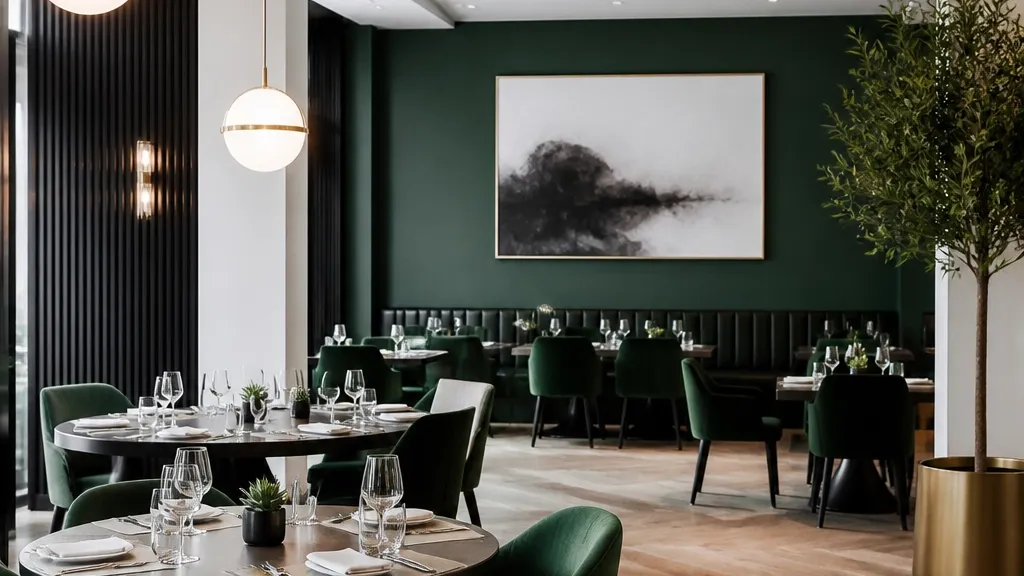
Running a restaurant in 2026 is a balancing act of rising costs, razor-thin margins, and the constant pressure to maintain a high-quality guest experience.
At Green Wing Energy Solutions, we often hear the same concern from restaurateurs: "I want to be more efficient, but I can’t afford to shut my doors to make it happen."
The good news is that you don't have to. Real energy efficiency doesn't always require a major construction project or a two-week closure. It starts with data, moves through smart management, and ends with a sustainable bottom line. We approach this through what we call a Discovery Assessment: a non-invasive look at how your building breathes and consumes, which allows us to build a tailored Discovery Assessment Report and Roadmap for your business.
Here are seven energy efficiency solutions you can implement today without missing a single service.
1. Deploy a Real Time Energy Monitoring System
You cannot manage what you do not measure. Most restaurants wait for their monthly utility bill to see the damage, but by then, it’s too late to change behavior.
Implementing an energy monitoring system provides a granular look at where your power is actually going. Is your walk-in fridge drawing excessive power at 3:00 AM? Is the extraction fan running at full tilt when the kitchen is empty? Real time energy monitoring allows you to identify these anomalies instantly.
This is the foundation of our Discovery Assessment. By seeing the peaks and troughs of your energy use in real time, we can pinpoint specific appliances or habits that are draining your profit. It requires zero downtime; sensors are typically non-intrusive and can be installed during a quiet prep period.
2. Transition to High-Output LED Lighting
Lighting might only account for 10-15% of your total energy spend, but it is one of the easiest "quick wins" in any Discovery Assessment Report and Roadmap. Traditional halogen or incandescent bulbs generate a significant amount of heat, which in turn makes your air conditioning work harder.
Switching to LEDs is a straightforward energy efficiency solution. Modern LED technology offers the same "warmth" and ambiance required for dining rooms while consuming up to 90% less energy. These can be swapped out bulb-by-bulb during daily cleaning or before doors open, ensuring no disruption to your guests.
3. Implement Automated Kitchen Shutdown Protocols
Human error is one of the largest hidden costs in a professional kitchen. When the Friday night rush ends, the priority for the team is cleaning and getting home. Often, grills, ovens, and plate warmers are left on "idle" for hours longer than necessary.
Creating a formalised startup and shutdown schedule is a zero-cost solution. However, to make it foolproof, we often recommend automated controls. These systems ensure that non-essential equipment is powered down during the night or between shifts. By layering this into your operations, you avoid the "phantom load" that often spikes during the very hours when TNUoS fees are being calculated.
4. Optimise HVAC with Smart Thermostats and Sensors
The "thermostat wars" between the front-of-house staff and the kitchen crew are legendary. Managing the climate in a space with high-heat cooking and high-density seating is complex.
Smart thermostats and wireless sensors allow for zoned climate control. Instead of cooling the entire building to 18°C because the kitchen is hot, sensors can detect occupancy and temperature in specific zones. This ensures the dining room remains comfortable while the kitchen gets the ventilation it needs.
Installation is quick and can be done area-by-area. Over time, this targeted approach significantly reduces the strain on your HVAC system, which is usually the second-largest energy consumer in a restaurant after the kitchen itself.
5. Prioritise Refrigeration Maintenance and Gasket Replacement
A refrigerator with a faulty door seal is effectively trying to cool the entire kitchen. If your gaskets are cracked or brittle, your compressors are working overtime, leading to higher energy bills and a shorter lifespan for the equipment.
Part of a proactive energy efficiency strategy involves regular, non-disruptive maintenance. Replacing gaskets, cleaning condenser coils, and checking refrigerant levels can be done during the morning prep window. These small adjustments ensure your refrigeration units run at peak efficiency, protecting both your food stock and your budget.
6. Calibrate Dishwasher Temperatures and Flow Rates
Water heating is energy-intensive. Many commercial dishwashers are set to temperatures higher than necessary for sanitation, or they are run half-empty.
By calibrating your machines to the optimal 140°F (60°C) and ensuring that staff only run full loads, you can save thousands of liters of water and the energy required to heat it. Modern energy efficiency solutions also include heat recovery systems for dishwashers, which capture the steam and use it to pre-heat the incoming cold water. These units can often be retrofitted without removing the machine from the line.
7. The Power of Incremental Equipment Upgrades
You don't need to replace every stove and fryer at once. The most successful Discovery Assessment Reports and Roadmaps involve a "replace-on-failure" or a phased upgrade plan.
When a piece of kit reaches the end of its life, replacing it with an Energy Star-certified or high-efficiency induction alternative makes a massive difference. Induction hobs, for example, are roughly 90% efficient compared to the 40-55% efficiency of gas. They also keep the kitchen cooler, reducing the load on your extraction and cooling systems.
How Green Wing Energy Solutions Simplifies the Process
We know that restaurant owners are experts in hospitality, not energy procurement or mechanical engineering. Trying to source quotes for solar panels, energy monitoring systems, or HVAC upgrades while managing a kitchen is a recipe for burnout.
This is where Green Wing Energy Solutions steps in. We act as your single point of contact for the entire process.
-
The Discovery Assessment: we analyse your current usage and infrastructure without getting in the way of your chefs.
-
The Discovery Assessment Report and Roadmap: We provide clear findings and a prioritized list of energy efficiency solutions, showing you the projected ROI for each.
-
Sourcing and Management: We source the quotes from trusted contractors, vet the technology, and manage the installation process from start to finish.
Our goal is to ensure that the only thing changing in your kitchen is the size of your energy bill: not the quality of your service.
Arrange an Energy Review Start with a free 15-minute discovery call.
Next step
See what your estate is really doing with energy.
Arrange an Energy ReviewStart with a free 15-minute discovery call.