7 Winter Energy Mistakes You’re Making in Your Commercial Building: and How to Fix Them
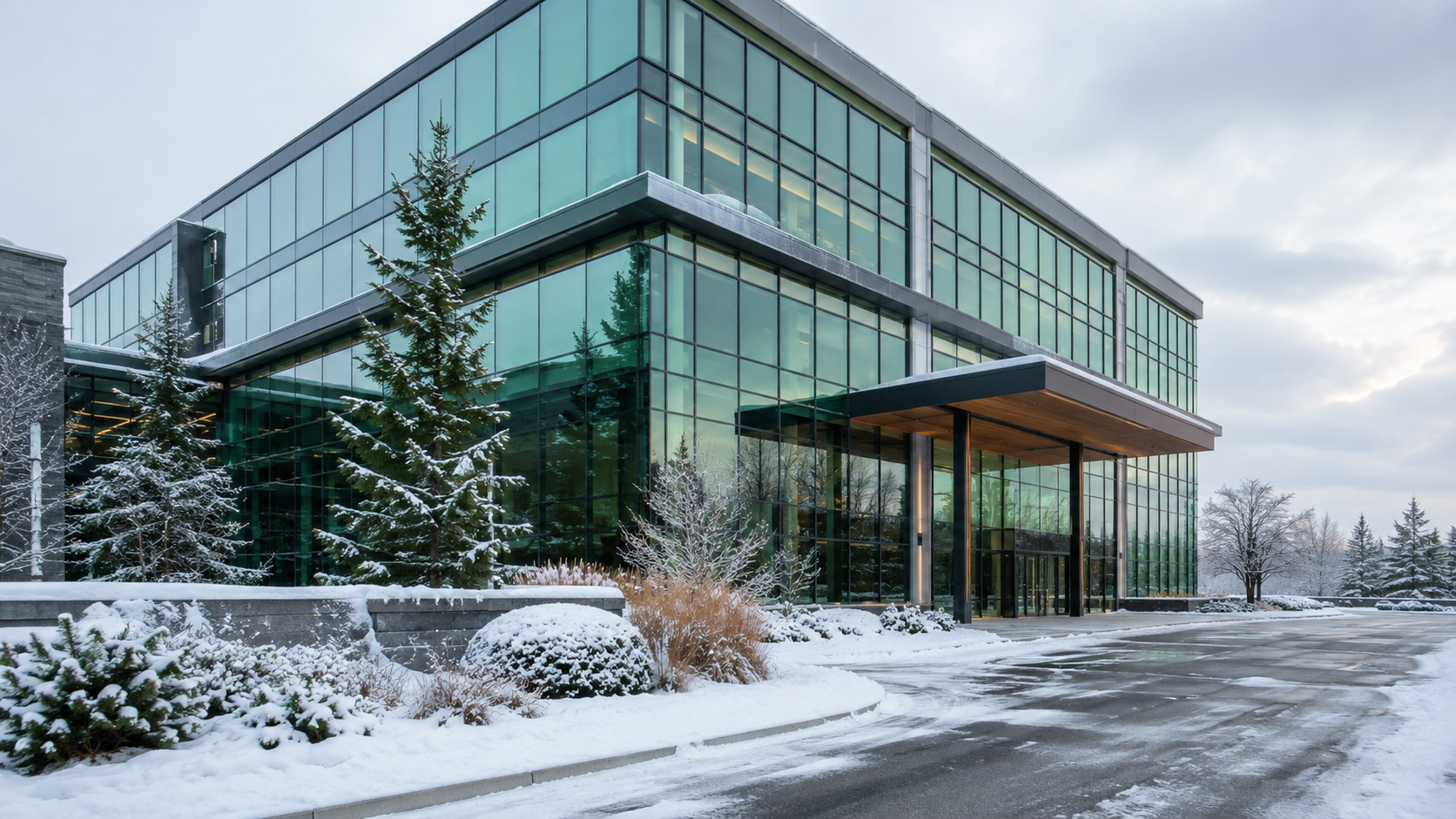
Winter puts commercial buildings under pressure.
Heating runs for longer. Ventilation systems work harder. Lighting hours increase. Hot-water demand rises. And any poor setting, faulty control or forgotten piece of equipment can quietly add to your energy bill every day.
The good news is that many of the most expensive problems are operational. They can often be corrected through better scheduling, clearer ownership and a site-based review.
As a realistic baseline, a typical high-energy commercial site may uncover savings in the low thousands per year from operational improvements and targeted energy efficiency solutions. £2,000–£8,000 a year can be a useful starting point for discussion, but it is not guaranteed : and the opportunity could be higher depending on the building, operating hours and energy profile.
1. Your heating schedule does not match occupancy
One of the simplest mistakes is also one of the most common: heating a building as though it is occupied 24 hours a day.
An office may be empty overnight. A gym may open early but use different areas at different times. A restaurant may have a long preparation period before service. A warehouse may only need heating in certain work zones.
Yet heating schedules are often left unchanged for years.
How to fix it
Before winter demand peaks:
- Check every time clock, programmer and BMS calendar.
- Set separate occupied, pre-heat, setback and unoccupied periods.
- Review weekday, weekend and bank-holiday schedules.
- Match pre-heating to the time the building actually needs to be comfortable.
- Check that seasonal changes and power outages have not reset controls.
- Use lower setback temperatures when appropriate rather than maintaining full comfort settings overnight.
A common commercial heating setpoint is around 19–20°C, but the right temperature depends on the space, activity and users. The important point is to avoid heating beyond what the building needs.
The Carbon Trust’s heating, ventilation and air conditioning guidance is a useful reference for reviewing controls and operating practices.
2. Your controls are technically present but poorly configured
Having a BMS, thermostat, timer or zone controller does not automatically mean the building is being managed efficiently.
Controls can be incorrectly commissioned, badly positioned or too complicated for staff to use confidently. A temperature sensor near a draught, direct sunlight or a heat-producing appliance may give the system the wrong information. A thermostat may be set too high because occupants are opening windows when rooms overheat.
The result is often discomfort and wasted energy at the same time.
How to fix it
Ask a competent person to review:
- Thermostat and sensor locations.
- Heating and cooling setpoints.
- Deadbands between heating and cooling.
- Frost protection and night setback settings.
- Thermostatic radiator valves and local overrides.
- Zone names and control logic within the BMS.
- Whether staff can understand and operate the controls correctly.
- Whether overrides are temporary or left active indefinitely.
Do not assume the original design still reflects how the building operates today. Tenants change, departments move, opening hours evolve and spaces are repurposed.
A controls review is often one of the most cost-effective energy savings solutions available because it improves the performance of equipment you already own.
3. You are heating empty or low-use zones
Commercial buildings rarely have consistent occupancy from one end to the other.
Meeting rooms, storage areas, vacant offices, changing rooms, corridors, back-of-house areas and seasonal spaces may sit empty for long periods. In larger premises, entire floors or wings may be lightly used while being heated and ventilated like the busiest areas.
This is particularly relevant to commercial landlords managing partially occupied buildings and multi-site operators with different patterns from one location to another.
How to fix it
Start by mapping the building into practical zones:
- Core occupied areas.
- Intermittently used spaces.
- Storage and circulation areas.
- Vacant or temporarily closed areas.
- Areas with specific temperature or ventilation requirements.
Then check whether each zone has an appropriate schedule and setpoint.
Occupancy sensors can help in meeting rooms, toilets, stores and other intermittently used spaces. However, sensors are not always the first answer. Sometimes the most effective action is simply to correct a schedule, close an unnecessary local heater or give site teams a clear shutdown procedure.
A short evening or weekend walk-round can reveal more than a year of bills. Look for warm empty rooms, running fans, illuminated storage areas and equipment operating without a clear operational reason.
4. Systems are blocked, dirty or neglected
Winter is the worst time to discover that a heating or ventilation system has been poorly maintained.
Blocked filters, dirty coils, obstructed grilles, poorly insulated pipework and neglected boiler plant all increase the effort required to deliver the same result. Fans may run harder. Boilers may cycle inefficiently. Radiators may struggle to distribute heat. Airflow can become unbalanced.
In a gym, this may affect ventilation and comfort during busy periods. In a hotel or restaurant, it can affect bedrooms, kitchens and public areas. In a warehouse, blocked air paths can make heating inconsistent across a large volume.
How to fix it
Before the heating season:
- Replace or clean filters according to the manufacturer’s instructions.
- Check that radiators, fan coils and grilles are not blocked by furniture or stock.
- Inspect exposed pipework and valves for missing insulation.
- Check for leaks, unusual noise and repeated fault codes.
- Confirm that boilers, burners, pumps and fans are serviced appropriately.
- Ensure external plant is clear of leaves, packaging and other obstructions.
- Record recurring faults rather than repeatedly resetting them.
Maintenance is not only about protecting equipment. It is an energy efficiency measure. A system that is clean, balanced and correctly maintained is more likely to deliver the required comfort with less energy.
5. Ventilation is excessive : or heating and cooling run together
Commercial buildings need adequate ventilation for health, safety, comfort and process requirements. The answer is not to shut ventilation down indiscriminately.
The problem is uncontrolled ventilation: extract fans running at full speed all day, outdoor-air dampers admitting more cold air than necessary, or systems operating at high rates when spaces are empty.
A related issue is simultaneous heating and cooling. One part of a system may be adding heat while another removes it. This can happen because of incorrect setpoints, sensor faults, poor control sequences or a lack of suitable interlocks.
It is effectively paying to create and then remove the same heat.
How to fix it
Review:
- Ventilation schedules by zone.
- Extract fan timers and controls.
- Outdoor-air damper settings.
- CO₂ or occupancy-based control where suitable.
- Heat-recovery performance.
- Heating and cooling deadbands.
- Air-handling unit and fan-coil control sequences.
- Sensor locations and calibration.
Ventilation should meet the needs of the space without creating unnecessary heat loss. The UK government’s Approved Document F, Volume 2 provides guidance for ventilation in buildings other than dwellings, while Approved Document L, Volume 2 covers energy performance and building services.
Where systems are complex, this is an area where a professional commercial energy audit can identify waste that is difficult to see from bills alone.
6. Hot-water circulation runs unnecessarily
Hot-water systems are easy to overlook because they are often hidden in plant rooms, risers and ceiling voids.
Circulation pumps may run continuously, even when demand is low. Pipework may be poorly insulated. Storage temperatures may be higher than necessary. Leaking taps, valves and toilets can create a constant background load.
Hotels, gyms, pubs and restaurants can be particularly exposed because hot water is needed across multiple areas and often at extended operating hours.
How to fix it
Check that:
- Circulation pumps operate to a suitable time or demand-based schedule.
- Pipework, valves and storage tanks are properly insulated.
- Hot-water temperatures meet hygiene and operational requirements without unnecessary overheating.
- Dripping taps, leaking valves and faulty controls are repaired quickly.
- Different parts of the building are not being circulated continuously without demand.
- Hot-water settings are reviewed after changes in occupancy or operating hours.
Any adjustment must maintain required hygiene standards. The objective is not simply to lower temperatures; it is to control generation and circulation intelligently.
7. Equipment and lighting stay on outside operating hours
A commercial building can appear closed while still consuming significant energy.
Computers, monitors, printers, catering equipment, display refrigeration, extraction fans, gym equipment, audio-visual systems, local electric heaters and security-related loads may all continue operating overnight.
Lighting is another frequent source of avoidable consumption. External lighting, signage, corridors, stockrooms, toilets and vacant offices are often illuminated for longer than necessary.
How to fix it
Introduce a simple out-of-hours checklist:
- Which equipment genuinely needs to remain on?
- Which loads can be switched off, placed into sleep mode or controlled by timers?
- Are lighting schedules aligned with access and cleaning times?
- Are occupancy sensors working?
- Are external lights controlled by timeclock, photocell or both?
- Are staff using portable heaters because the main system is poorly controlled?
A night-time audit is particularly useful. It shows what is actually running, rather than what people believe is running.
The Carbon Trust’s better business guide to energy saving includes practical checks for heating, timing, lighting and equipment.
Find the issues that matter most
The seven mistakes above do not all carry the same financial impact.
In one building, correcting the heating schedule may be the priority. In another, ventilation or hot-water circulation may dominate. A warehouse may have substantial savings in lighting and heating zones, while a hotel may need a closer look at hot water, guest areas and plant-room controls.
That is why Green Wing starts with evidence.
Our Onsite Discovery Assessment examines how the building operates in practice. We inspect major loads, controls, heating circuits, ventilation, lighting and routines : then separate operational quick wins from technology opportunities.
The findings can be developed into a Discovery Assessment Report and Roadmap, with opportunities ranked by:
- Savings potential.
- Estimated payback.
- Complexity.
- Suitability for the site.
- How the result will be measured and verified.
Green Wing is an independent consultancy. We do not install equipment or push a single product line. Where a capital project is justified, we can source quotes from vetted suppliers, help compare the options and manage the process from approval through to completion.
That keeps the focus on the right order of action:
- Fix avoidable operational waste.
- Confirm the baseline.
- Prioritise projects by ROI and payback.
- Implement suitable solutions.
- Verify that the savings are real.
You can learn more about our approach on the Services, Solutions and About Us pages.
Prepare before the cold weather arrives
Winter energy savings do not begin with a new boiler, heat pump or lighting system.
They begin with understanding what your commercial building is doing now.
Review schedules. Check controls. Walk empty areas. Inspect neglected systems. Confirm ventilation strategy. Challenge unnecessary hot-water circulation. Switch off what does not need to run.
Then use site evidence to decide whether a larger project is worthwhile.
Book your Discovery Assessment today and take the first step towards a more efficient business.
Arrange an Energy Review Start with a free 15-minute discovery call.
Next step
See what your estate is really doing with energy.
Arrange an Energy ReviewStart with a free 15-minute discovery call.