Great British Grid: The Connection Queue Is Changing — Is Your Energy Project Ready?
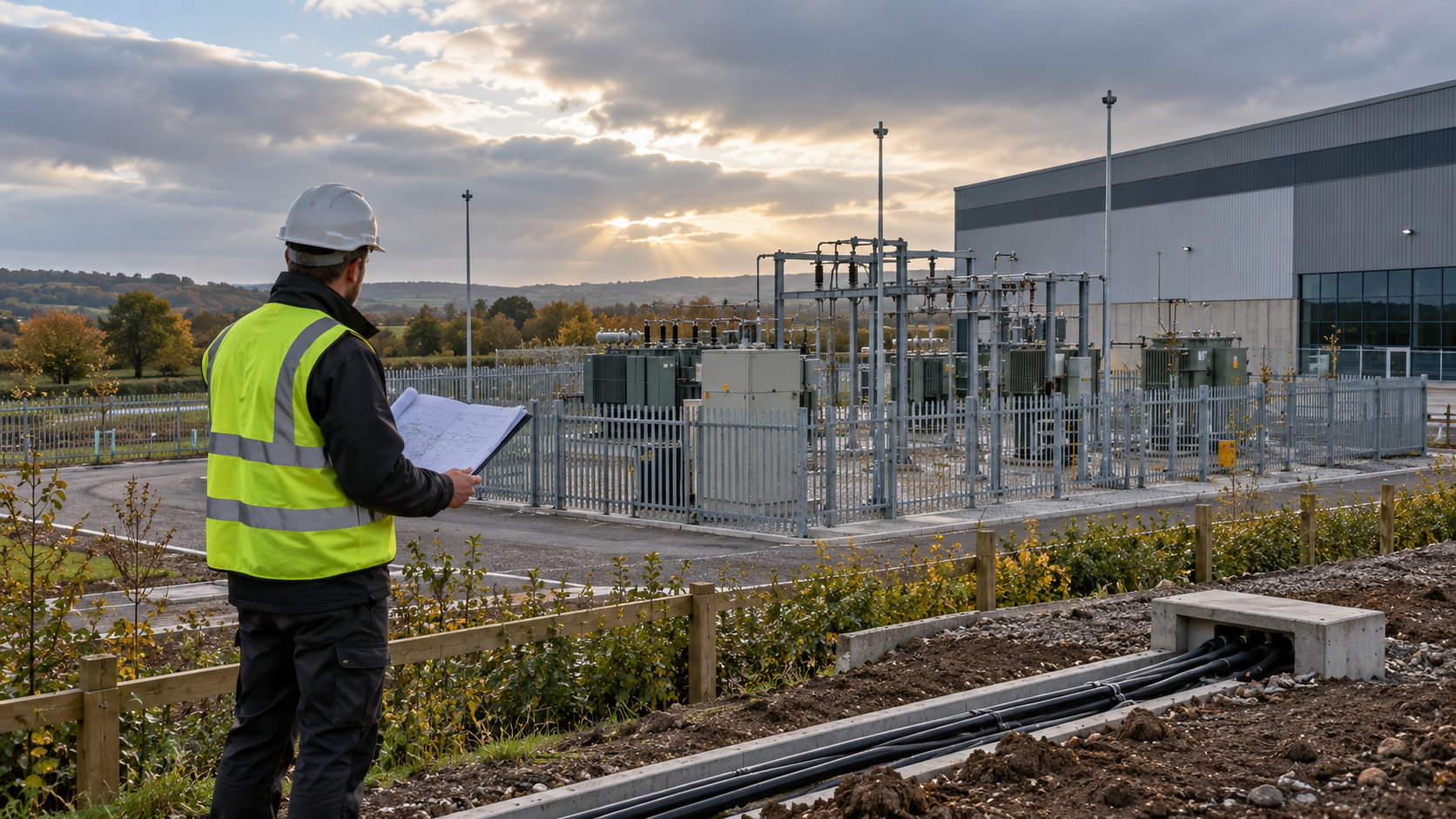
The Government has announced Great British Grid, a new publicly owned body intended to help accelerate electricity-network investment, speed up connections and support lower energy costs.
For businesses, the headline is encouraging. Grid delays have held back developments ranging from manufacturing expansion and electric vehicle charging to onsite generation, battery storage and the electrification of heat.
But the most useful question is not simply whether Britain will have a stronger grid.
It is whether your project will be ready when a better route to connection becomes available.
A shorter queue does not automatically turn an unclear idea into an investable project. Businesses will still need credible demand forecasts, a realistic technical scope, clear ownership and evidence that the proposed connection reflects what the site genuinely needs.
This article explains what has been announced, what remains uncertain and what commercial energy users can do now.
What has the Government announced?
On 29 September 2026, the Department for Energy Security and Net Zero announced Great British Grid, a new body that will sit within Great British Energy.
Its stated purpose is to bring additional public investment into electricity-network infrastructure while working alongside existing network companies and private investors.
The announcement includes three ideas that are particularly relevant to commercial and industrial energy users:
- More investment in grid infrastructure, intended to expand and modernise the network.
- Wider use of self-build connections, allowing developers and businesses to build parts of their own connection where appropriate rather than waiting for a network company to complete all the work.
- More competition in transmission delivery, with a wider range of organisations able to bid to deliver new infrastructure.
The Government says self-build reforms have reduced connection times by up to 11 months in Ireland. That does not mean every UK project will receive the same benefit, but it explains why self-build connections form part of the proposal.
Great British Grid is not intended to replace the organisations already responsible for the electricity system. Ofgem will remain the regulator, the National Energy System Operator will continue to plan and coordinate the system, and existing network operators will retain their current roles.
That distinction matters. This is a new investment and delivery mechanism, not an instant redesign of every connection process.
The long-term budget is also still to be determined through a future spending review. Businesses should therefore treat the announcement as a direction of travel rather than assume that new capacity or faster dates are already available at their site.
Why connection readiness is becoming more important
Britain does not only have a shortage of network capacity. It has also had a queue filled with projects at very different stages of maturity.
Earlier this year, the Government said the transmission demand queue had grown by 460% in six months, with some projects facing waits of up to 15 years. Its response has been to support a system that gives greater priority to projects that are ready, needed and capable of progressing.
The Government also says more than 300 GW of speculative capacity has already been removed from the wider connections queue.
The direction is clear: holding a place in a queue without a credible route to delivery is becoming harder to justify.
Ofgem’s current work on electricity connections also focuses on projects that are ready and needed, alongside clearer customer protections and a better connection experience. Its latest consultation, published on 25 September, remains open until 6 November 2026.
For businesses, this creates both an opportunity and a responsibility.
If connection reform succeeds, viable projects may move more quickly. But to benefit, a business must be able to explain what it wants to connect, why the capacity is needed, when the project can proceed and what evidence supports the request.
A project does not become ready because the board has approved an ambition. It becomes ready when the site, the numbers and the delivery plan agree.
Which commercial projects could be affected?
The grid is no longer a background issue relevant only to utilities and major power stations. It increasingly shapes ordinary commercial decisions.
Electrification of heat
A business considering heat pumps, electric boilers or other electric-heating technologies may require more electrical capacity than the existing connection can provide.
The scale of that requirement depends on the building’s heat demand, operating pattern, fabric, emitter temperatures, controls and the extent to which existing demand can be reduced first.
Electric vehicle charging
Depot charging, fleet electrification and rapid public charging can create large new loads. The connection request must reflect how many vehicles will charge, at what times, at what power and whether smart charging can reduce the peak.
Manufacturing and site expansion
New production lines, refrigeration systems, process equipment and building extensions can all increase demand. A project may be commercially ready but still constrained by the available electrical supply.
Solar, batteries and onsite generation
These projects may need an export connection, an import connection or both. Their value can depend on local network limits, the site’s own demand profile and how much generated electricity can be used behind the meter.
Data centres and other high-demand developments
Large, concentrated loads make connection capacity a central part of site selection and project viability. Government policy is increasingly focused on distinguishing credible, strategically important demand from speculative applications.
The common thread is simple: the proposed technology cannot be considered separately from the site’s present and future energy profile.
Five things businesses should do before seeking more capacity
1. Establish what the site actually uses now
Start with evidence rather than a future equipment list.
Review half-hourly electricity data where it is available, maximum demand, seasonal peaks, operating hours and the loads responsible for the highest periods of use.
The annual electricity total is not enough. Two sites using the same number of kilowatt-hours can place very different demands on the network if one has a sharp afternoon peak and the other uses power steadily across the day.
Site observation matters too. Data can show when a peak occurs, but not always why. The cause may be simultaneous equipment starts, electric heating, kitchen demand, refrigeration cycles, production schedules or plant that should not have been running.
2. Remove avoidable demand before sizing the future connection
This is not about shrinking every project. It is about avoiding the cost and delay of requesting capacity the business does not need.
If equipment is running outside operating hours, controls are poorly coordinated or major loads are starting together unnecessarily, the recorded peak may exaggerate the site’s true requirement.
Reducing avoidable demand can:
- release capacity for new equipment;
- reduce the size of a connection upgrade;
- improve the case for electrification;
- change the size of a battery or solar installation; and
- lower both capital and operating costs.
The order matters. Understand the existing load, correct what should not be there, and then model the new demand.
3. Model the operating pattern—not just the nameplate rating
Adding the rated power of every proposed asset can produce a misleading answer.
Equipment rarely operates at full load simultaneously and continuously. Equally, assuming diversity without evidence can understate the capacity required.
A useful model should consider:
- when each new load will operate;
- which loads can coincide;
- start-up currents and short-duration peaks;
- seasonal variation;
- future expansion;
- resilience requirements; and
- whether loads can be controlled or shifted.
For an EV fleet, the relevant question is not simply the total rating of all chargers. It is whether every vehicle genuinely needs to charge at full power at the same time.
For heat electrification, it is not simply the output of the proposed heat pump. It is how the system performs during the coldest periods, what backup heat is required and how the building can retain heat.
4. Test alternatives to a larger connection
Some sites will need more network capacity. Others may be able to achieve their objective through a better combination of efficiency, control and flexibility.
Options may include:
- phased equipment operation;
- smart EV charging;
- load limiting;
- thermal storage;
- battery storage;
- onsite generation;
- revised production schedules; or
- a staged rollout across several sites.
These measures are not automatic substitutes for reinforcement. Their suitability depends on the site and the operational risk. But they should be tested before a larger connection is treated as the only route forward.
5. Build a project that can survive scrutiny
Connection reform is moving towards greater evidence of readiness.
A credible project should have a named owner, a defined business purpose, a realistic delivery programme and a technical scope based on measured demand.
Depending on the project, supporting evidence may include:
- control of the site or land;
- planning status;
- equipment specifications;
- a phased demand forecast;
- funding or approval milestones;
- the proposed connection date;
- a delivery team; and
- clear dependencies and risks.
The aim is not to create paperwork for its own sake. It is to show that the requested capacity is connected to a real project with a real route to completion.
What faster connections would not solve
The Great British Grid announcement is significant, but it should not be mistaken for an immediate answer to every commercial energy problem.
It does not mean:
- connection dates will change overnight;
- every project will move forward more quickly;
- every site will receive the capacity it requests;
- electricity prices will immediately fall;
- self-build will be suitable for every connection; or
- existing equipment and controls no longer need to be understood.
National infrastructure and onsite performance are different parts of the same energy picture.
A better network can help unlock well-designed projects. It cannot correct an oversized proposal, an inaccurate load forecast or technology that does not suit the building.
That is why preparation should begin before a formal connection offer becomes the critical path.
For multi-site estates, the best first project may not be the biggest site
Organisations with several locations have an additional advantage: they can compare opportunities rather than treating every site in isolation.
One site may have the greatest theoretical saving but also face a difficult connection, limited space or an uncertain lease. Another may have a slightly smaller opportunity but a clearer electrical position, stronger operational ownership and a faster route to delivery.
A sensible estate strategy can rank sites according to:
- present energy demand;
- available electrical capacity;
- the condition of existing plant and controls;
- connection risk;
- operational benefit;
- project readiness;
- capital requirement; and
- the ability to verify the result.
This turns grid capacity from a late-stage surprise into an early commercial consideration.
It also helps the business learn. A successful project at a well-chosen first site can provide real performance data, delivery experience and a stronger case for the next location.
Questions worth asking now
If your organisation is planning electrification, expansion, EV charging, onsite generation or storage, ask:
- What is the site’s actual maximum demand, and what creates it?
- How much of that demand is avoidable or movable?
- What new capacity is required, and when?
- Is the proposal based on measured operating data or equipment assumptions?
- Could control, flexibility or phasing reduce the connection requirement?
- What evidence shows that the project is ready to proceed?
- Which planning, funding or operational dependencies remain unresolved?
- Has the local network position been checked early enough?
- Who owns the connection process inside the business?
- How will the project’s energy and commercial outcomes be verified?
If these questions cannot yet be answered, the project may still be a good idea. It is simply not ready to enter the connection process with confidence.
The announcement creates an opportunity to prepare—not a reason to wait
Great British Grid signals a stronger focus on electricity-network investment, competitive delivery and faster connections for viable projects.
That is welcome. But businesses do not need to wait for every policy detail before improving their own position.
They can establish the current load, remove avoidable demand, test the suitability of proposed technologies, model future requirements and build a clear evidence trail now.
When the connection route improves, the organisations best placed to benefit will be those that already understand what they need and can demonstrate why.
Is your planned energy project based on what the site genuinely needs—or on what the equipment list appears to require?
Green Wing’s Onsite Discovery Assessment examines the way a commercial site actually uses energy, including plant, controls, operating routines and major electrical loads. The resulting Discovery Assessment Report and Roadmap helps businesses distinguish immediate operational improvements from longer-term investment needs and gives decision-makers a clearer basis for the next technical conversation.
Arrange an Energy Review or start with a free 15-minute discovery call.
Arrange an Energy Review Start with a free 15-minute discovery call.
Next step
See what your estate is really doing with energy.
Arrange an Energy ReviewStart with a free 15-minute discovery call.