The Summer Energy Survival Guide: Solar, Storage, and the AC Dilemma
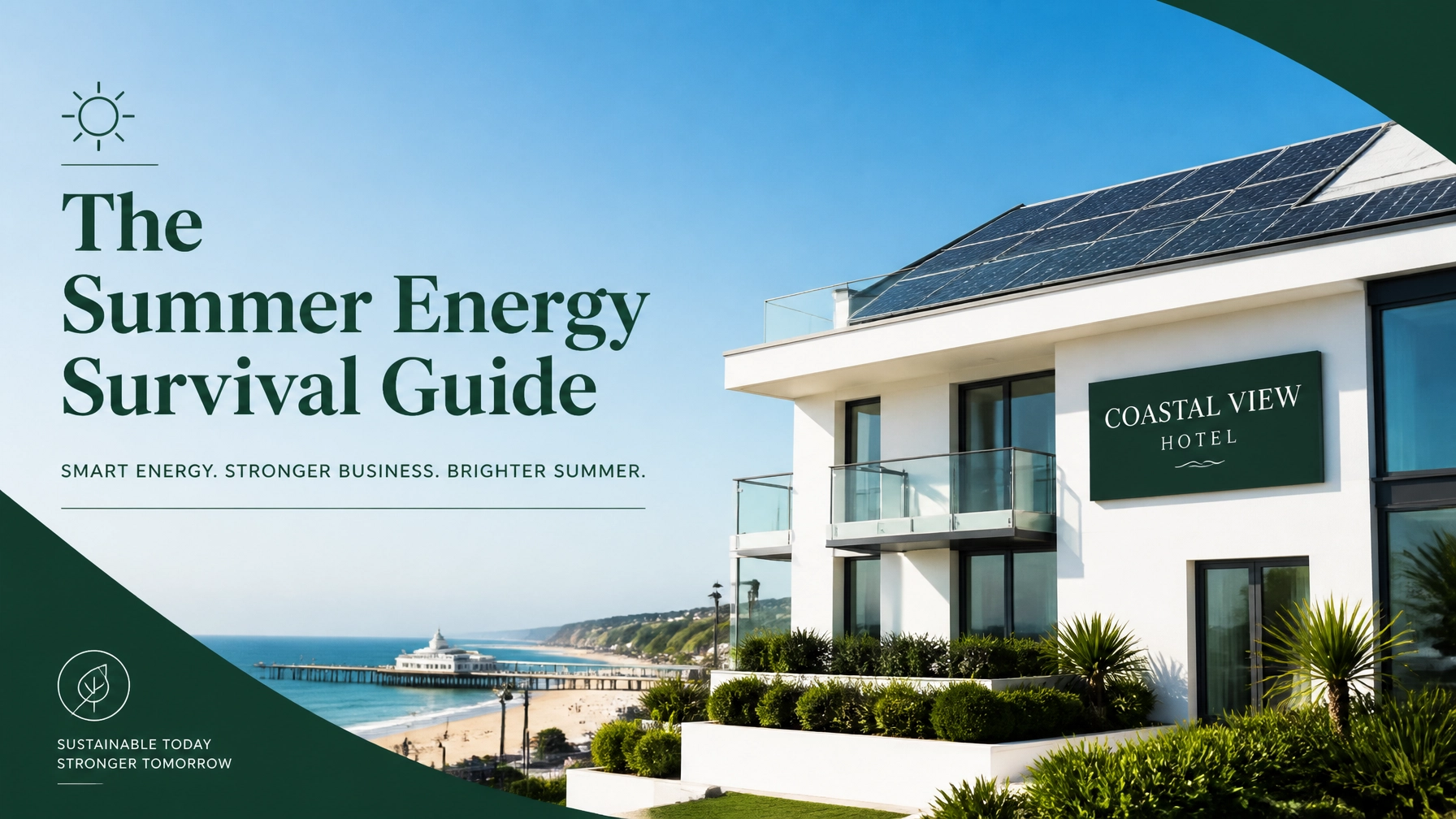
It’s good to be back.
I’ve been away on annual leave for the last week, enjoying a bit of the summer sun myself. Because I missed our usual weekly update, I wanted to make sure this return edition was a "double bumper" special. We’re covering the two biggest energy conversations currently dominating the hospitality and commercial property sectors: the spiralling cost of summer cooling and the strategic shift toward solar and storage.
If you’re running a hotel, a gym, or a pub in Dorset right now, you know that summer isn’t just about increased footfall: it’s about the silent margin-killer humming away on your walls and rooftops: the air conditioning.
Let’s dive into how you can stop the heat from burning through your Q3 profits.
The Summer AC Dilemma: From "Luxury" to "Essential"
A few years ago, air conditioning in a UK hotel or pub was often seen as a "nice to have." In 2026, that has completely changed. Guest expectations have shifted; a warm hotel room is no longer just an inconvenience: it’s a one-star review waiting to happen. For gyms, it’s a health and safety baseline. For pubs and restaurants, it’s the difference between a packed house and an empty terrace.
But here is the dilemma: as AC becomes essential, the electricity costs associated with it are reaching a breaking point for independent businesses.
The Real Cost of a Cool Room
Based on current 2026 commercial electricity rates: which are sitting between £0.27 and £0.34 per kWh: running a standard AC unit is more expensive than many operators realise.
If you’re running modern split systems in your guest rooms, you’re looking at roughly 10p to 40p per room, per hour. It doesn’t sound like much until you scale it. For a 50-room hotel in a town like Bournemouth or Poole, a single month of heavy AC usage during a hot stretch can easily add £2,000 to £3,000 to your electricity bill.
If you’re still using older units or, heaven forbid, portable "plug-in" units to manage hotspots, those costs can double. Portable units are notoriously inefficient, often costing upwards of 41p per hour just to cool a single small space.
When you factor in the "always-on" nature of hospitality, these cooling costs aren't just a line item; they are a direct hit to your bottom line during your busiest season.
Smart Cooling: Efficiency Beyond the "On" Switch
So, how do you keep guests happy without handing your entire profit margin to the energy suppliers? It starts with moving away from reactive cooling and toward a strategic approach.
1. The "Inverter" Advantage
If your AC systems are more than 7–10 years old, they likely lack modern inverter technology. Older systems operate like a light switch: they are either 100% on or 100% off. Modern inverter splits, however, vary their speed to maintain a constant temperature. Upgrading to high-efficiency inverter AC can deliver the same cooling for half the electricity cost.
2. The Power of Air Movement
In common areas: lounges, breakfast rooms, and lobbies: full AC isn't always the answer. Modern, high-spec ceiling fans or professional evaporative coolers use a fraction of the power. A fan typically costs less than 1p per hour to run. By using fans to circulate air, you can often raise your AC setpoint by 2 or 3 degrees without guests noticing a difference in comfort. Every degree you raise the thermostat can save you up to 8% on your cooling costs.
3. Zonal Control and Automation
One of the biggest wastes we see during our Discovery Assessments is AC running in unoccupied rooms or empty function halls. Implementing smart zonal controls: where the AC is tied to room occupancy or keycard entry: ensures you aren't cooling empty space.
Solar + Storage: The Dorset Hospitality Strategy
While reducing demand is the first step, the second is changing how you source that power.
We’ve seen a massive surge in solar interest across Bournemouth, Christchurch, and the wider Dorset area this year. Why? Because the hospitality load profile is a perfect match for solar generation. You need the most power during the day when the sun is out: to power those AC units, commercial kitchens, and laundry facilities.
Why Solar Now?
For a mid-market hotel, a typical solar array can now see a payback period of just 3 to 4 years. When you consider the lifetime of the panels (25+ years), the ROI is staggering.
In many cases, we’re seeing hotels save upwards of £20,000 to £70,000 in their first year alone by switching to solar. It’s not just about "being green"; it’s about energy independence. By generating your own power, you lock in your rates for the next two decades, protecting your business from the next inevitable price spike.
The Missing Piece: Battery Storage
Solar is fantastic when the sun is shining, but for a 24/7 business like a hotel or a gym, the sun isn't always enough. That’s where Battery Energy Storage Systems (BESS) come in.
Adding a battery allows you to:
- Store Excess Solar: If your panels produce more than you need at midday, you don't have to sell it back to the grid for pennies. You store it and use it to power your evening service or overnight lighting.
- Arbitrage the Grid: Even without solar, a battery allows you to "buy low and use high." You can charge the battery from the grid during off-peak hours (when electricity is cheapest) and discharge it during peak afternoon periods when prices are at their highest.
- Smooth the Peaks: AC units create "peaks" in your energy demand. A battery can handle these sudden draws, preventing you from hitting expensive peak-usage tiers with your supplier.
Your Roadmap to a Cooler, Cheaper Summer
At Green Wing Energy Solutions, we don't sell you panels or AC units. We sell you the clarity to know exactly what your business needs.
Most business owners know they are wasting energy, but they don't know where or how much. Our process is designed to take that guesswork away:
- The Discovery Assessment: We spend 2–4 hours on-site at your property, looking at everything from your AC units and cellar cooling to your roof space and meter data.
- The Roadmap: Within 48 hours, you receive a branded report that outlines exactly where your savings are hiding. We identify the "quick wins" (like thermostat adjustments) and the long-term investments (like solar and storage).
- Managed Sourcing: If you decide to go ahead with an upgrade, we manage the quotes. We go out to our vetted supplier network, negotiate the best rates, and handle the project from approval to completion. You get a single point of contact; we handle the headache.
Whether you are a commercial landlord looking to improve your property’s value or a hotel manager trying to protect your Q3 margins, the first step is always data.
Don't Let the Summer Heat Drain Your Profits
The summer of 2026 is proving to be a wake-up call for many businesses. The "old way" of managing energy: paying the bill and hoping for the best: is no longer sustainable.
If you’re ready to see how much your building is currently "leaking" in energy costs, let’s talk. Our Discovery Assessment is the fastest way to turn your energy spend from a liability into a strategic advantage.
Want to see a sample Roadmap for a business like yours?
Connect with Jon on LinkedIn or send us a message here to request a sample report and book your assessment. Let’s make sure next summer is your most profitable one yet.
Arrange an Energy Review Start with a free 15-minute discovery call.
Next step
See what your estate is really doing with energy.
Arrange an Energy ReviewStart with a free 15-minute discovery call.